Application of glass ionomer when filling class I and II cavities in permanent teeth
- Author: O.Mykolaichuk
- Denta Plus

The filling of large cavities in the molar teeth is considered to be the most difficult procedure. Since the molars are subjected to a high masticatory load, the quality of the filling is of particular importance. Currently, more and more dentists are using light curing composites to seal cavities of classes I and II. This is not surprising, because patients want their teeth to look "new" and dentists can no longer be satisfied with the usual "repair" of broken or carious teeth. General dental practice is rapidly developing: the picture of diseases is changing, new materials and methods of treatment are emerging. A dentist often faces the problem of choosing the optimal material and the technology used.
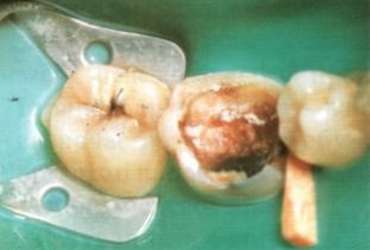
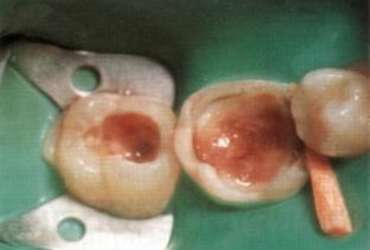
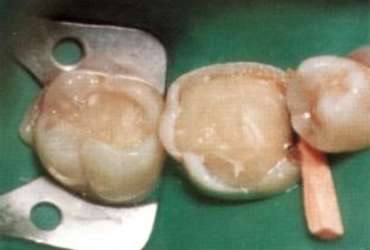
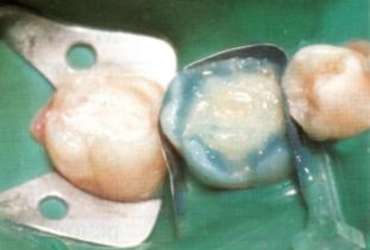
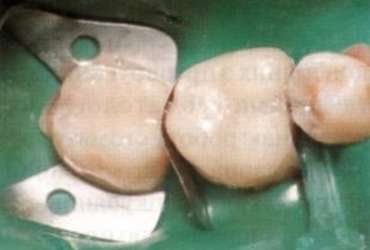
The restoration of defects similar to the defect 46 of the tooth shown on the slides can be performed either directly or indirectly. And indirect restoration can be performed both in a laboratory way and clinically in one visit - with the manufacture of a tab on an elastic model, or in the patient's mouth with the use of separation gels and subsequent additional polymerization.
The very high degree of adhesion of modern dentin-binding materials, as well as the extremely high strength and wear resistance of composites, often bribe dentists to perform direct composite restorations in such cases.
However, we should not forget that when we are dealing with a large volume of a composite, the problems associated with polymerization shrinkage often go out of control, causing marginal depressurization, micro-leakage, postoperative sensitivity, secondary caries, and a number of other complications.
With extensive damage to hard tissues of teeth, in order to avoid the above complications, the combination of a composite and glass ionomer ("sandwich" technology) is more rational.
The best material replacing the dentin is3M Whittramer, which, along with the known advantages of glass ionomer cements, such as: prolonged release of fluoride ions, chemical adhesion, biocompatibility, has a triple polymerization mechanism, due to which the material has a strength higher than amalgam and composites.
The unique mechanism of the triple polymerization of Vitremera frees the dentist from the need for layer-by-layer application of the material, which greatly simplifies the technology and saves time.
APPLICATION OF THE MATERIAL VITREMER HAS A LINE OF ADVANTAGES:
- The absence of internal stresses, excludes the formation of transverse cracks in the weakened walls of the enamel, bottom separation with delignation (separation) of dentin, micro-leakage and postoperative sensitivity
- Preventing the development of secondary caries in cases of depressurization in certain areas of the restoration due to the prolonged release of fluoride ions by the glass ionomer.
- High strength and homogeneity of the restoration due to the chemical adhesion of the glass ionomer to the tooth tissues and the micromechanical compound of the composite with glass ionomer, dentin and enamel.
- Ease of use, time saving, cosmetic effect.


- Author: O.Mykolaichuk
- Denta Plus